Author: jon@calumetmedia.ca

  • Un Ontarien décède après une collision en solo à Litchfield

    Un Ontarien décède après une collision en solo à Litchfield

    Un jeune homme de l’Ontario est décédé à l’hôpital à la suite d’une collision en solo sur la route 148 à Litchfield dimanche après-midi (5 juillet). 

    Les services d’urgence ont été appelés sur les lieux, près du 1198, route 148, à 16 h 30. 

    Le sergent Marc Tessier, porte-parole de la Sûreté du Québec, a déclaré lundi que le conducteur, âgé de 21 ans, a été transporté à l’hôpital dans un état critique et a été déclaré mort plus tard dans la journée. L’autre occupant du véhicule a été transporté à l’hôpital avec des blessures ne mettant pas sa vie en danger. 

    La route a été fermée temporairement dimanche pendant que la police enquêtait sur les lieux. Tessier a ajouté que la police n’a pas encore confirmé la raison pour laquelle la voiture a quitté la route, mais a précisé qu’elle ne croyait pas que la vitesse ou l’alcool aient été des facteurs dans la collision. 

  • Ontario man dies after single-vehicle crash in Litchfield

    Ontario man dies after single-vehicle crash in Litchfield

    A young man from Ontario died in hospital following a single-vehicle crash on Highway 148 in Litchfield Sunday afternoon (July 5). 

    Emergency crews were called to the scene, near 1198 Highway 148 at 4:30 p.m. 

    Sûreté du Québec spokesperson Sgt. Marc Tessier said Monday that the driver, 21, was transported to hospital in critical condition and was pronounced dead later that day. The other occupant of the vehicle was taken to hospital with non-life-threatening injuries. 

    The road was closed temporarily on Sunday while police investigated the scene. Tessier added police have yet to confirm the reason the car went off the road, but said they do not believe speed or alcohol to be factors in the crash. 

  • Otter Lake Summerfest brings out community

    Otter Lake Summerfest brings out community

    Otter Lake’s 150th anniversary celebrations continued over the weekend with a full-day summer party on Saturday. 

    Sarah Gravelle, one of the organizers, said that the timing had more to do with when the RA grounds were available during the summer. 

    “This is all part of the planning last year we did for the 150th,” she said. “Our RA is a very busy spot, and it’s booked a lot. July 4 has no significant meaning, it’s just we went with a day the grounds were available. And we figured it’s a good time because a lot of the cottagers are here now.”

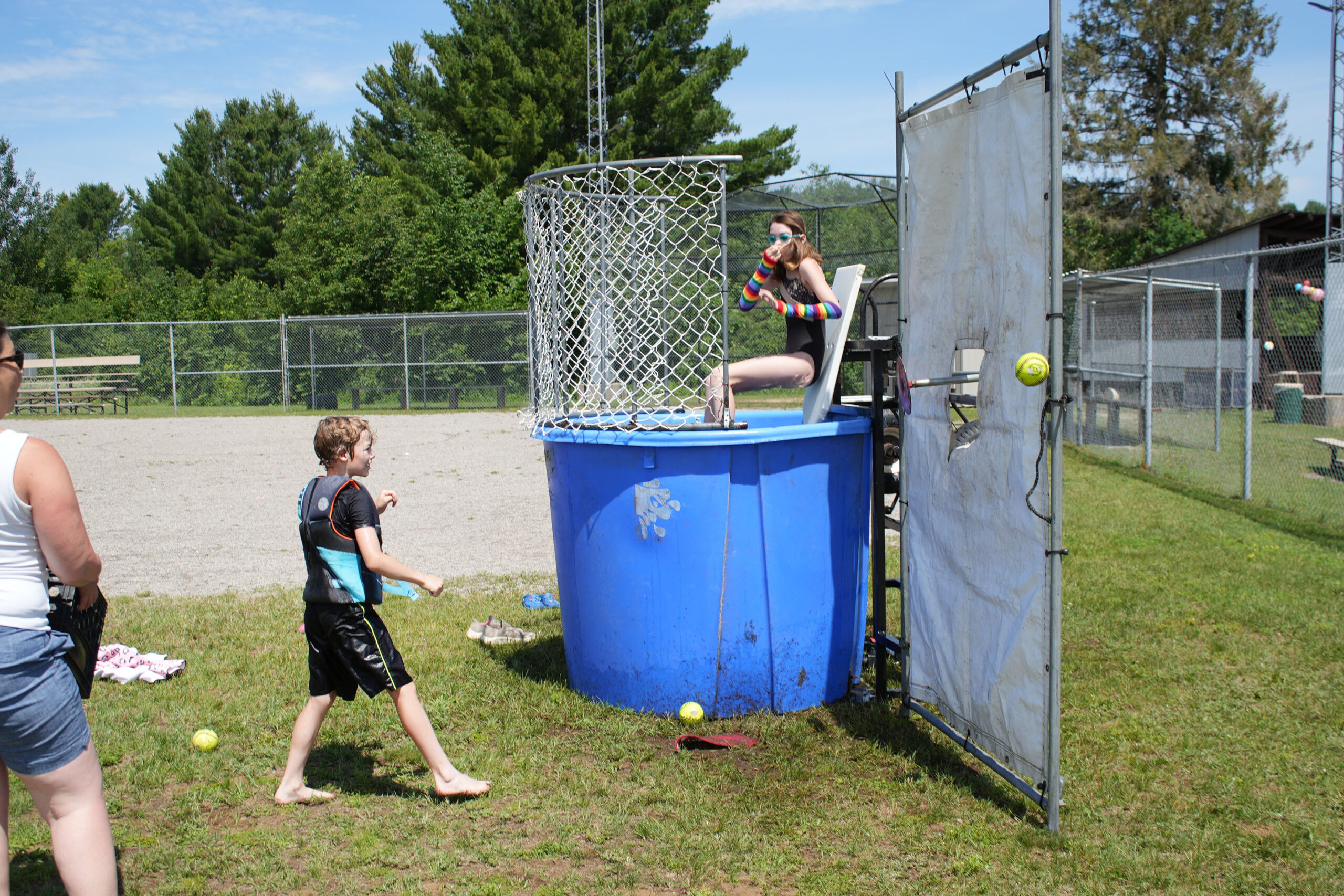
    She said that they had vendors out in the hockey rink and several different children’s activities in the ball diamond, from inflatables to facepainting to a dunk tank. Over by the RA hall there was also a petting zoo. 

    “It’s a beautiful day, we’re so lucky,” Gravelle added. 

    A draw was held for the Otter Lake 150 quilt, which was won by the family of Mat and Nora Rioux and Kat MacGregor.

    Over at the car show, Geatan Boudrias was showing off his 2001 Toyota Celica GTS, which he’s owned for 12 years. A big fan of the Japanese car maker, he said he does all the work on the vehicle himself.

    “I love the way their cars, their engines are designed,” he said. “I have 250 horse in this little car, and it weighs like 2,000 pounds. She’s a rocket. I beat Camaros and Mustangs with this thing.”

    Rayne and Belle Cloutier pose with one of the miniature horses in the petting zoo during Otter Lake’s Summerfest.
    Geatan Boudrias of Campbell’s Bay was showing off his 2001 Toyota Celica GTS at Otter Lake’s Summerfest on Saturday.
  • Given’er in Quyon: Tractor pull draws a crowd

    Given’er in Quyon: Tractor pull draws a crowd

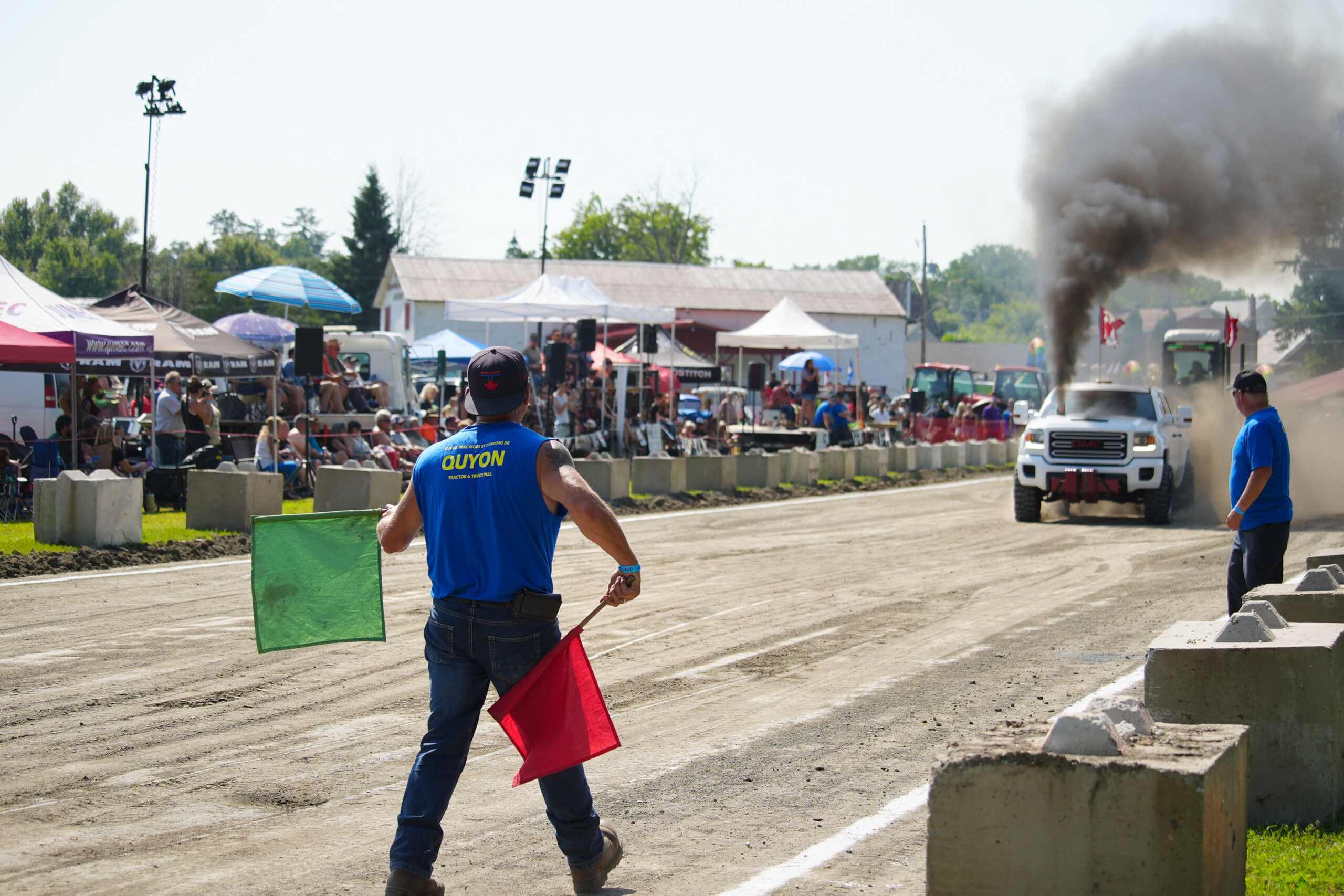
    The fairgrounds in Quyon were packed with hundreds of spectators on Saturday afternoon for the Quyon Truck and Tractor Pull.

    Kerry Lynn O’Connell, one of the organizers, said that she was pleased with the turnout, noting they were expecting around 1,500 attendees.  

    “This looks like a great crowd, the weather’s fantastic, we pushed the time back hoping the weather would cooperate with us, and the heat not be so bad with this heat wave,” she said.

    O’Connell added that the committee of around 10 works to organize the event, but they also rely on a small army of volunteers that help keep the day running. 

    She said that historically there had been a pull in Quyon back in the ‘80s and ‘90s that was very popular, and their committee worked to revive the event for the benefit of the community. 

    “A lot of us have connections in the pulling world and we wanted to bring it back to our town because it brings people to the town, it helps the local business and puts the town on the map again,” she said. 

    Jeff Cochrane of Great Lakes Premier Pulling, which helped put on the event, explained that they had connections with some of the organizers of the Quyon pull, who have attended their events in central Ontario in the past. He said he was proud to help out with the event. 

    “The guys just decided to come down and support them in their event. Just bring some new iron down here and hope for the future.”

    Barbara Cochrane was racing her Super Modified two-wheel-drive truck ‘Walk the Line’, an enormous grey machine with a monstrous supercharged engine. An accomplished puller, Cochrane said she had travelled down to Louisville, Kentucky for the National Farm Machinery Show, where she placed fifth last year and second the year before. 

    “It was quite an accomplishment for someone from Canada to go down,” she said. “It’s the World Series of pulls, it’s the best of the best.”

    Cochrane ended up winning the Quyon pull’s Super Modified 2WD division. She said that she got into pulling because of her husband. 

    “You can only go around for so long before you go, ‘Hey, I want to try that,’” she said, adding that there’s a lot more to learn than just jamming your foot on the gas. She said what keeps her coming back is the incredible pulling community. 

    “We all go around and do cookouts and stuff like that, it’s a big family really,” she said. “We’re competitors on the track but it’s’ our way of life, this is what we do.” 

    The day’s winners were Mel Smallman in the Street Gas Trucks (7,000 lbs) division, Ian Legault in the Street Diesel (8,500 lbs) division, Nicholas Ladouceur in the Modified Diesel Trucks (8,200 lbs) division, Curtis Shea with “The Mistress” in the 2WD Modified Trucks (6,200 lbs) division, Jeff Hannaberry with “Wiskey bent and Hell bound” in the Single Engine Modified division, Dwayne Newans with “Wild Thing” Modified 4X4 Trucks division, Jody Langton with “Bits and Pieces” in the Modified Light Tractors (8,500 lbs) division, Jody Langton with “Binder Bait” in the Modified Heavy Tractors (10,500 lbs) division, and Barb Cochrane with “Walk the Line” in the Super Modified 2WD division.

    Barbara Cochrane stands with her supermodified two-wheel drive truck “Walk the Line” at the Quyon Truck and Tractor Pull on Saturday. She ended up winning her division.

  • Footy fans gather in Norway Bay for Canada-Morocco match

    Footy fans gather in Norway Bay for Canada-Morocco match

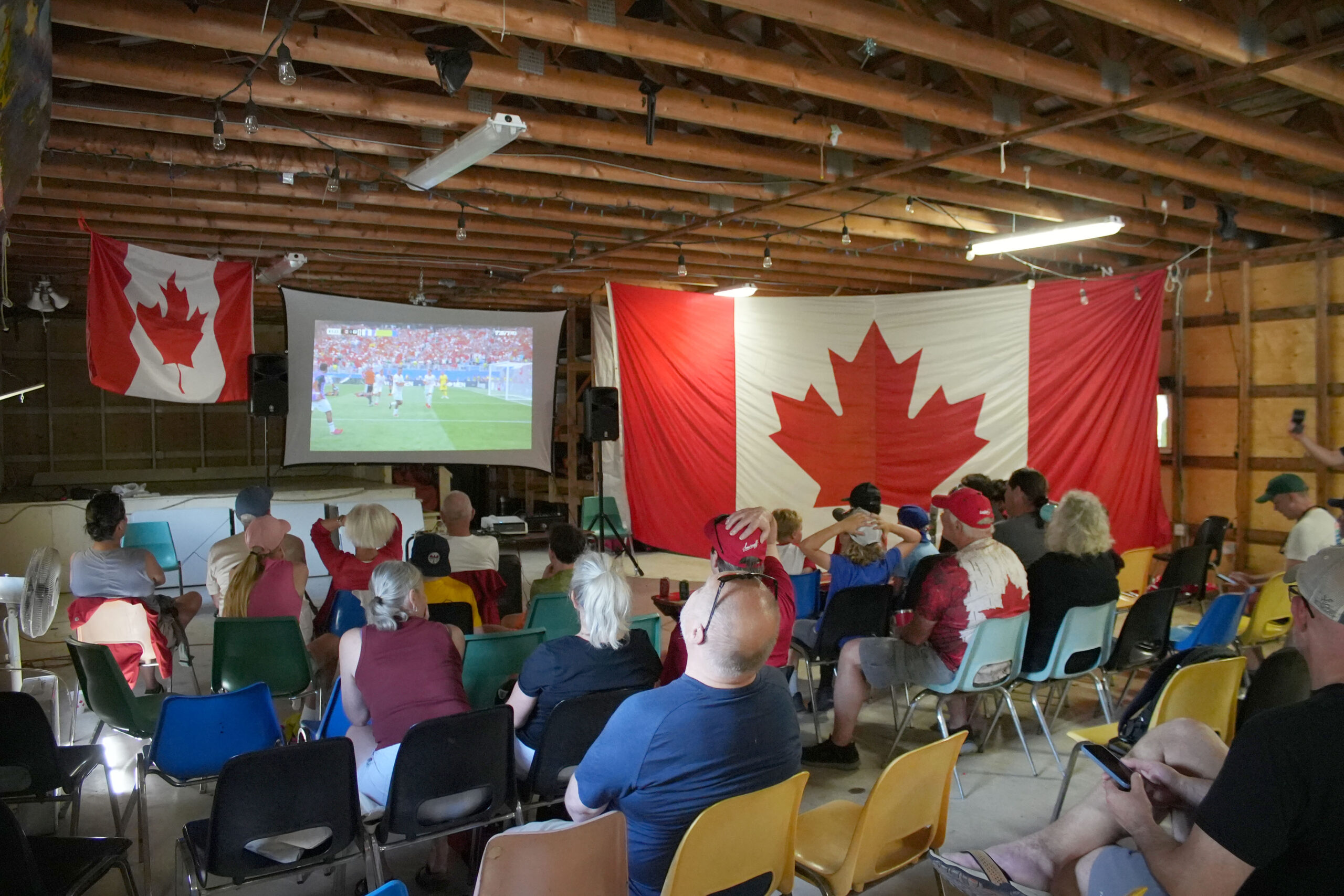
    Centennial Hall in Norway Bay was full with football fans on Saturday afternoon ready to cheer on team Canada in their World Cup knockout match against Morocco. 

    The event was put on by the Norway Bay Municipal Association (NBMA), a group that organizes activities for the community throughout the summer. 

    NBMA President Pat Byrne said that they usually have an opening event around this time of year, and this season’s timing worked out perfectly with the World Cup match.

    “This is a kickoff event, we’ve done different versions of it over the years. It’s really because all of the families come up to start the program,” he said. “A lot of them want to come and pick up their shirts, sign up for different programs and such. We used to set up the tables, we decided a few years ago to try and do an event around that. So this year coincidentally lined up nicely with the Canada-Morocco game.”

    The NBMA’s social director Jamie Harris took the lead on the day’s event, with the help of the rest of the team. In addition to the game on the big screen, there was food and drink available as well as tables outside for NBMA clothing and program sign-up. During the half-time break, Byrne launched an appeal for volunteers for the summer programs, saying that they were on the lookout for more help. While the board is made up of 13 people, he said they have dozens of people who lend a hand with various activities and events each year. 

    “What we’re finding is though, as the demographics shift, there aren’t as many people up for the whole season as their used to and so there aren’t as many people available as there were in the past, so we’re having to rethink how we go about getting the number of people we need for all these events,” he told THE EQUITY. 

    The outcome of the game was not what the fans were hoping for unfortunately, as Morocco downed the Canadians 3-0. 

  • Alors que le myriophylle prend de l’ampleur, une autre espèce envahissante progresse aussi dans les cours d’eau du Pontiac

    Alors que le myriophylle prend de l’ampleur, une autre espèce envahissante progresse aussi dans les cours d’eau du Pontiac

    Alors que le contrôle de la propagation du myriophylle à épis domine peut-être la plupart des discussions sur les espèces envahissantes dans le Pontiac cet été, une autre créature aquatique de plus en plus préoccupante dans la région de l’Outaouais devrait être connue des plaisanciers et des pêcheurs. 

    Le ministère de l’Environnement de la province a identifié plusieurs cours d’eau du Pontiac qu’il juge vulnérables à la propagation des daphnies épineuses, une espèce envahissante qui, selon lui, peut avoir des impacts négatifs sur les populations de poissons locales. 

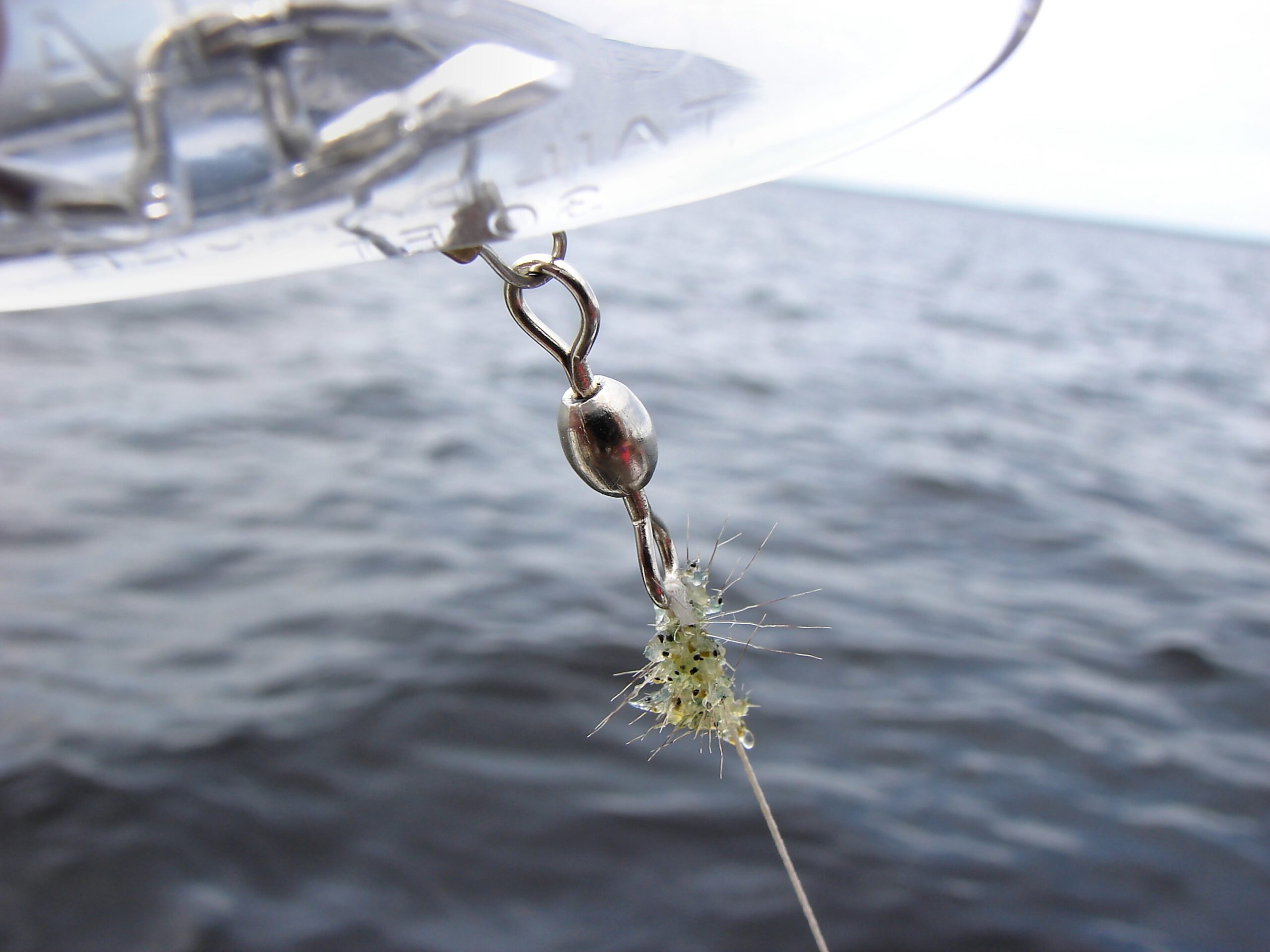
    Faisant partie de la famille du zooplancton, ces créatures sont de petits crustacés qui peuvent atteindre jusqu’à 1,5 cm de longueur. Elles sont reconnaissables par leur longue queue épineuse, qui représente plus de la moitié de la longueur de leur corps. Lorsqu’elles sont regroupées, comme elles apparaissent souvent dans les plans d’eau qu’elles ont infestés, elles forment une grande masse gélatineuse, parsemée de minuscules points noirs. 

    L’espèce entre en compétition pour la nourriture avec d’autres zooplanctons ainsi qu’avec les larves de poissons, réduisant la disponibilité de la nourriture et affectant potentiellement les populations de poissons en amont de la chaîne alimentaire dans les cours d’eau touchés. 

    Ces daphnies ont été découvertes pour la première fois dans les Grands Lacs au début des années 1980, mais elles ont lentement migré vers d’autres plans d’eau dans le sud de l’Ontario et du Québec. 

    Une étude de 2023 menée dans le lac Champlain a révélé que les invasions de daphnies épineuses ont entraîné le déclin des populations de zooplancton indigènes. Les chercheurs ont également constaté que l’espèce entre en compétition pour la nourriture avec des espèces de poissons populaires comme le cisco de lac et le doré jaune. 

    Le ministère affirme que l’espèce a déjà été détectée dans le système de la rivière des Outaouais, y compris en 2021 près du lac McConnell à Rapides-des-Joachims. L’espèce a depuis été détectée dans la rivière à L’Isle-aux-Allumettes, à Hull et à Aylmer. 

    En septembre 2024, l’espèce a été détectée dans le réservoir Baskatong par un pêcheur, ce qui a mené à un inventaire complet du réservoir pour mieux évaluer sa présence. Mme Desrosiers a écrit que l’étude produira des données nécessaires sur la façon dont l’espèce évolue au cours de la deuxième et de la troisième année de son établissement. Cette année, le ministère mènera également un inventaire de l’espèce le long de la rivière Gatineau, dans laquelle le réservoir Baskatong se déverse. 

    « Nous estimons que l’espèce est probablement présente sur toute la rivière des Outaouais », a écrit la porte-parole du ministère, Eve Morin Desrosiers. 

    L’espèce est communément propagée par les plaisanciers et les pêcheurs lorsqu’ils transfèrent des embarcations et des équipements non lavés d’un plan d’eau à un autre.

    Dans le Pontiac, le ministère n’a pas confirmé une présence généralisée, mais a identifié plusieurs lacs considérés comme particulièrement vulnérables, notamment les lacs Leslie, Johnson, Usborne, le lac à la Truite, le lac Jim, le lac Galarneau, le lac Dumont et le lac Lynch, compte tenu de leur popularité auprès des plaisanciers et des pêcheurs. 

    « Les lacs les plus à risque pour la propagation des daphnies épineuses sont les lacs les plus accessibles et les plus fréquentés. Le risque provient principalement des plaisanciers qui se déplacent d’une zone contaminée vers les lacs de l’Outaouais sans laver adéquatement leur embarcation », a écrit Mme Morin Desrosiers. 

    Garde-rivière des Outaouais avertit qu’au cours des cinq dernières années, les espèces aquatiques envahissantes sont devenues plus courantes dans tout le bassin versant. Un rapport de 2025 sur les espèces envahissantes dans le bassin versant a recensé un grand nombre d’observations dans les rivières Madawaska et Mississippi, toutes deux affluents de l’Outaouais.

    « Puisqu’elles sont presque impossibles à éliminer une fois établies, la prévention et la détection précoce des espèces envahissantes sont essentielles pour prévenir les impacts écologiques et économiques à long terme », peut-on lire dans le rapport. 

    Garde-rivière des Outaouais, ainsi que le ministère québécois de l’Environnement, rappellent aux plaisanciers de nettoyer leurs embarcations, leur équipement et leur matériel de pêche afin de protéger les cours d’eau. Le ministère conseille d’inspecter tout équipement ayant touché l’eau et d’en retirer tout organisme qui y est attaché, puis de vider toute eau avant de quitter l’embarcation.

    Des stations de lavage d’embarcations dans le Pontiac sont situées à Otter Lake (15, av. Palmer), à Alleyn-et-Cawood (10, ch. Jondee) et à Sheenboro (4, ch. Schyan). 

  • As milfoil grows its reach, another invasive species is also making a move on Pontiac waterways

    As milfoil grows its reach, another invasive species is also making a move on Pontiac waterways

    While controlling the spread of the Eurasian milfoil weed may be dominating most invasive species conversations in the Pontiac this summer, there is another aquatic creature of growing concern in the Outaouais region that boaters and anglers should be aware of. 

    The province’s environment ministry has identified several Pontiac waterways it deems vulnerable to the spread of spiny waterfleas, an invasive species it says can have adverse impacts on local fish populations. 

    Part of the zooplankton family, these creatures are small crustaceans that can grow up to 1.5 cm in length. They are recognizable by their long spiny tail, which accounts for more than half of their body length. When clumped together, as they often appear in waterbodies they have infested, they form a large gelatinous mass, speckled with tiny black dots. 

    The species competes for food with other zooplankton as well as fish larvae, reducing food availability and potentially affecting fish populations up the food chain in affected waterways. 

    These water fleas were first found in the Great Lakes in the early 1980s, but they’ve slowly been migrating to other bodies of water in southern Ontario and Quebec. 

    A 2023 study in Lake Champlain found that spiny waterflea invasions resulted in declines of native zooplankton populations. Researchers have also found the species to compete for food with popular fish species such as lake herring and walleye. 

    The ministry says the species has already been detected in the Ottawa River system, including in 2021 near Lac McConnell in Rapides-des-Joachims. The species has since been detected in the river at L’Isle-aux-Allumettes, Hull and Aylmer. 

    In Sept. 2024 the species was detected in the Baskatong reservoir by an angler, leading to a complete inventory of the reservoir to better gauge its presence. Ministry spokesperson Eve Morin Desrosiers wrote that the study will yield needed data on how the species evolves in the second and third year of its establishment. This year, the ministry will also conduct an inventory of the species along the Gatineau River, into which the Baskatong Reservoir flows. 

    “We judge that the species is probably present along the entire Ottawa River,” wrote Morin Desrosiers. 

    The species is commonly spread by pleasurecrafters and anglers as they transfer unwashed vessels and equipment from one body of water to another.

    In the Pontiac, the ministry has not confirmed widespread presence but has identified several lakes considered particularly vulnerable, including Leslie Lake, Johnson Lake, Usborne Lake, Lac à la Truite, Lac Jim, Lac Galarneau, Lac Dumont and Lac Lynch, given their popularity. 

    “The lakes that are most at risk for propagation of the spiny waterflea are the lakes that are the most accessible and most frequented. The risk comes primarily from pleasurecrafters that move from a contaminated zone to the lakes of the Outaouais without properly washing their boat,” wrote Morin Desrosiers. 

    Ottawa Riverkeeper warns that in the past five years, invasive aquatic species have become more common throughout the watershed. A 2025 report on invasive species in the watershed found a large number of sightings in the Madawaska and Mississippi rivers, both tributaries of the Ottawa.

    “Since they are nearly impossible to eliminate once established, invasive species prevention and early detection are key to preventing long-term ecological and economic impacts,” the report reads. 

    Ottawa Riverkeeper, as well as the Quebec environment ministry, are reminding boaters to clean their boats, gear and fishing equipment as a way to protect waterways. The ministry advises to inspect all gear that has touched the water and remove any organisms that are attached to it, then empty any water before leaving the vessel.

    Boat-washing stations in the Pontiac are located in Otter Lake (15 av. Palmer), Alleyn-et-Cawood (10 ch. Jondee) and Sheenboro (4 ch. Schyan). t-Cawood (10 ch. Jondee) and Sheenboro (4 ch. Schyan). 

  • Full-Time Reporter

    Full-Time Reporter

    We are currently accepting applications for a full-time reporter to join our small team covering the news of the Pontiac region for both our weekly newspaper and our digital platforms. 

    Who we are: 

    Founded in 1883, The Equity is a local newsroom with deep roots in the communities it serves.  Our headquarters are in Shawville, Quebec, but we report on the 19 municipalities and two counties of the greater Pontiac region. 

    Our team is dedicated to covering the news and stories of this particular corner of the world, where few others are doing this work, helping people who live in the Pontiac stay connected and make sense of life here. There is no story too big or too small for The Equity, as long as it touches somebody or something local. 

    Your role:

    The job is 35 hours/week with a salary of $41,860 a year and two weeks of vacation. The position is based in Shawville, Quebec, and the start date is Aug. 12, 2026.

    Our ideal candidate is strong writer and a self-starter, ready to hit the ground running to find important stories that need to be covered in this region.  As we continue to connect with more readers online, we are looking for someone who will bring innovative ideas for reaching new audiences through both how we tell stories, and how we share them. 

    Key responsibilities:

    • Research, pitch and report a wide variety of stories, including news, features and community events, and see them through to completion
    • Manage competing deadlines to produce 4-6 stories a week 
    • Produce strong photographs and video to accompany both print and digital stories 
    • Be available to cover weekend events across the region

    Requirements: 

    • A proven ability to write clear, factually accurate and fair journalism, and take strong photographs
    • A valid driver’s license 
    • A basic level of French is needed for conducting some interviews 

    Note: A formal training in journalism is not a requirement, though candidates should be able to demonstrate knowledge of what makes a good story, as well as strong writing abilities. 

    To apply:

    If interested, please send the following to the editor, Sophie Kuijper Dickson (sophie@theequity.ca) by Wednesday, July 29 at 5 p.m.

    • resume
    • cover letter
    • two samples of your writing (ideally reported articles)

    We thank all applicants for their interest. Only candidates selected for an interview will be contacted.


    Journaliste à temps plein

    Nous acceptons actuellement les candidatures pour un poste de journaliste à temps plein afin de joindre notre petite équipe chargée de couvrir l’actualité de la région du Pontiac, tant pour notre journal hebdomadaire que pour nos plateformes numériques.

    Qui nous sommes :

    Fondée en 1883, The Equity est une salle de rédaction locale profondément enracinée dans les communautés qu’elle dessert. Notre siège social est situé à Shawville, au Québec, mais nous couvrons les 19 municipalités et les deux comtés de la grande région du Pontiac.

    Notre équipe se consacre à couvrir l’actualité et les récits de ce coin de pays unique, où peu d’autres médias font ce travail. Nous aidons ainsi les résidents du Pontiac à rester connectés et à donner un sens à la vie d’ici. Il n’y a pas de reportage trop grand ou trop petit pour The Equity, tant qu’il touche une personne ou une réalité d’ici.

    Votre rôle :

    Il s’agit d’un poste de 35 heures par semaine, offrant un salaire annuel de 41 860 $ et deux semaines de vacances.

    Notre candidat ou candidate idéale fait preuve d’autonomie et est prête à passer rapidement à l’action pour dénicher les sujets importants qui méritent d’être couverts dans la région. Alors que nous continuons de développer notre lectorat en ligne, nous recherchons une personne qui saura proposer des idées novatrices pour joindre de nouveaux publics, tant par sa manière de raconter les histoires que par sa façon de les diffuser.

    Principales responsabilités :

    • Rechercher, proposer et rédiger une grande variété de reportages (actualités, articles de fond et événements communautaires) et mener les projets à terme.
    • Gérer des échéances serrées et concurrentes afin de produire de 4 à 6 articles par semaine.
    • Prendre des photos de qualité et réaliser des vidéos pour accompagner les reportages imprimés et numériques.
    • Être disponible pour couvrir des événements la fin de semaine dans toute la région.

    Exigences :

    • Capacité éprouvée à rédiger des articles journalistiques clairs, rigoureux et justes, et à prendre des photos de qualité.
    • Permis de conduire valide.
    • Une connaissance de base du français est requise pour mener certaines entrevues.

    Note : Une formation officielle en journalisme n’est pas obligatoire, mais les candidats et candidates doivent démontrer une bonne compréhension de ce qui constitue un bon sujet de reportage, ainsi que d’excellentes compétences en rédaction.

    Pour postuler :

    Si ce poste vous intéresse, veuillez faire parvenir les documents suivants à la rédactrice en chef, Sophie Kuijper Dickson (sophie@theequity.ca), au plus tard le mercredi 29 juillet à 17 h :

    • Votre curriculum vitae (CV)
    • Une lettre de présentation
    • Deux exemples de rédaction (idéalement des articles de presse)

    Nous remercions tous les candidats et candidates de leur intérêt. Seules les personnes sélectionnées pour une entrevue seront contactées.